


Discover distinctive diamond shapes — and how to choose one for a ring that feels unmistakably yours.
You know the round solitaire. You have probably saved an oval engagement ring or admired an emerald cut. But what about other fancy shaped diamonds.
But what about a Dutch marquise center diamond framed by shield-cut side stones? A flower-inspired lily cut? Or an oval with broad, mirror-like reflections instead of the familiar brilliant-cut sparkle?
Welcome to the world of specialty and fancy-cut diamonds, where your engagement rings options extend well beyond the usual jewelry-store display.
At Houston Diamond Outlet, our approach starts with individuality: understanding your vision, comparing your diamond options, and helping you create jewelry around your style and budget. Our private consultation process includes hand-selected diamonds and custom-design possibilities — not simply choosing from whatever happens to be in a case.
Welcome to the world of fancy shaped lab grown diamonds. Here is what you should know before choosing an unusual diamond.
First, What Is a Fancy-Cut Diamond?
In jewelry terminology, “fancy shape” generally refers to a diamond shape other than round. That includes familiar choices such as oval, pear, and emerald, as well as less-common silhouettes such as shields and lozenges.
Shape and cutting style are related, but they are not the same thing:
- Shape describes the outline you see from above.
- Cutting style describes the arrangement of the facets — the polished surfaces that influence how the diamond handles light.
That distinction matters. Two diamonds can share an oval outline yet look dramatically different because one has brilliant-style faceting and the other has step-style faceting. Step cuts emphasize orderly reflections and broad flashes, while brilliant-style arrangements generally create more active, fragmented sparkle.bezambar+1
Also, “fancy cut” does not mean “fancy color.” The first describes a diamond’s shape or cutting style; the second describes its color.
Seven Specialty Diamond Styles at a Glance
Diamond styleDefining featureA design direction to exploreASHOKA®Branded elongated cut with rounded corners and 62 facetsRefined, elongated center-stone designsDutch marquisePointed ends with straight, angled sidesArchitectural solitaires and three-stone ringsShieldCrest-like outline with a broad upper section and tapered pointDistinctive centers or matched side stonesPortugueseIntricate, multi-tier faceting with a high facet countStatement rings and pendantsLilyFlower-inspired silhouetteBotanical jewelry and artistic ringsLozengeRhombus-like outline with pointed cornersGeometric and Art Deco-inspired designsOval step cutOval outline with step-style reflectionsUnderstated, architectural engagement rings
These descriptions identify general characteristics, not a universal cutting specification. Specialty names, proportions, and facet patterns can vary by producer; ASHOKA® is specifically a branded design.lilyarkwright+6
1. ASHOKA®: A Branded Cut With a Distinct Identity
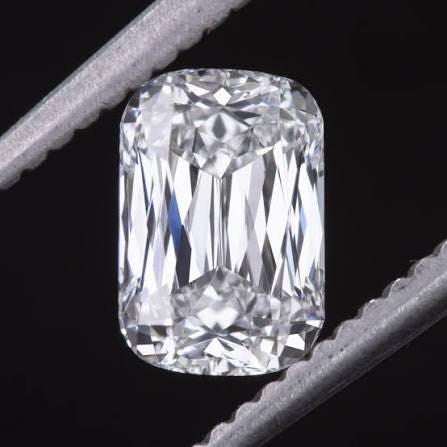
ASHOKA® is not a generic name for any elongated diamond with rounded corners. William Goldberg introduced the modern branded cut in 1999, and its distinctive design features 62 facets. Its elongated outline combines a structured profile with softened corners.williamgoldberg
For shoppers drawn to an emerald-cut silhouette but interested in a different facet pattern, ASHOKA® is worth understanding as its own category — not as an interchangeable label for a similar-looking stone.
What to ask before buying
- Is this an authentic ASHOKA® diamond or a different elongated specialty cut?
- What documentation identifies the stone?
- What are its actual length and width?
- How does its appearance compare with other elongated diamonds you like?
ASHOKA® is associated with William Goldberg’s trademarked design. A diamond marketed elsewhere as “Ashoka-style” should not automatically be treated as an authentic branded ASHOKA®. Availability and sourcing must be confirmed separately; this guide does not imply Houston Diamond Outlet is an authorized ASHOKA® retailer.williamgoldberg+1
2. Dutch Marquise: The Architectural Alternative
A Dutch marquise combines pointed ends with straighter, angled sides. Compared with the curved outline of a traditional marquise, it reads more like an elongated hexagon — structured, geometric, and distinctive.lilyarkwright+1
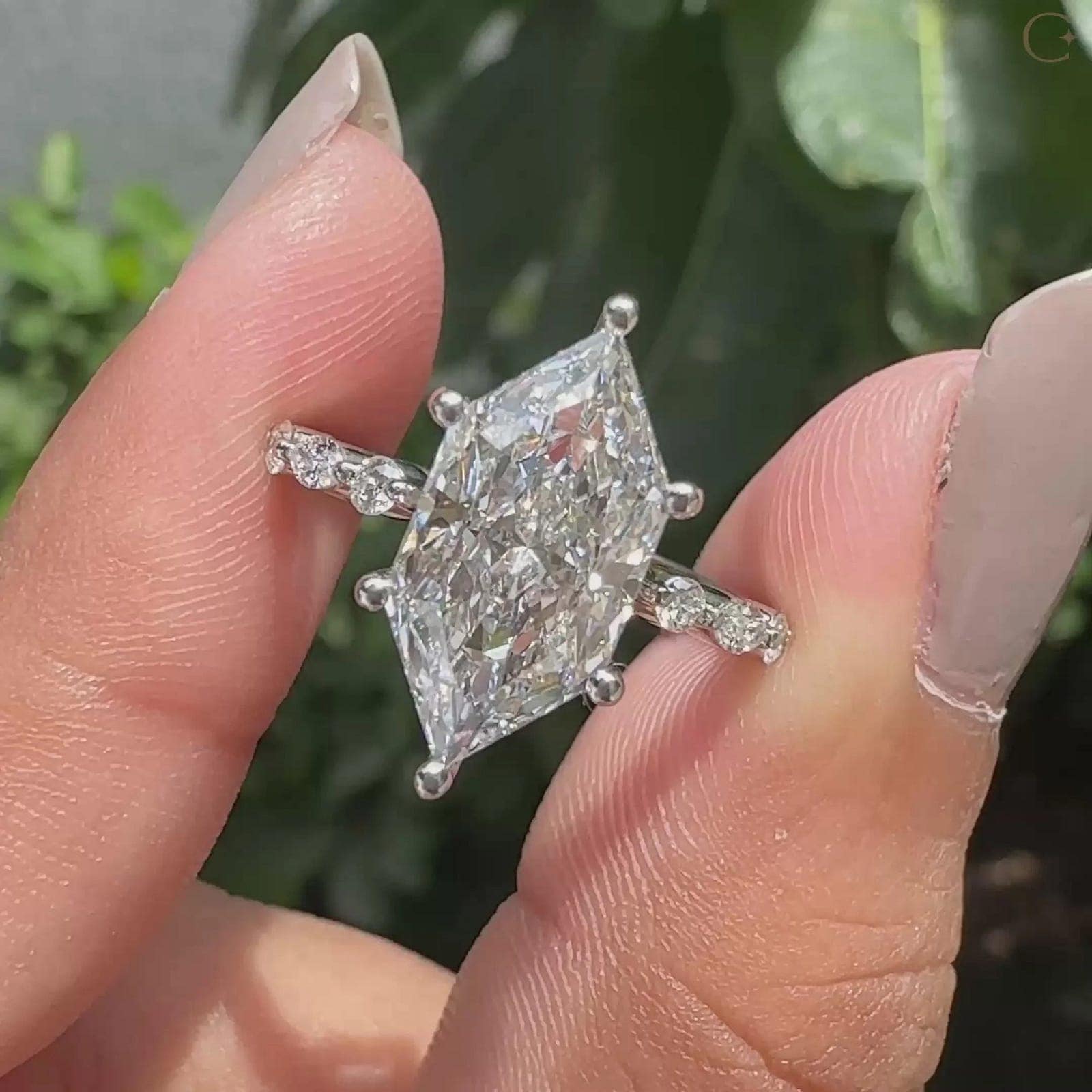
It is a compelling starting point for someone who says, “I like an elongated diamond, but I want something different.”
Design ideas to explore
- A clean solitaire that emphasizes the outline.
- A three-stone ring with shield-shaped side diamonds.
- A bezel-style concept that traces the geometry.
- An east-west orientation for an unexpected look.
Ask to see the actual diamond rather than choosing by the name alone. Dutch marquise diamonds may use different facet arrangements, including step-style designs, and the proportions can change the personality of the stone considerably.lilyarkwright+1
3. Shield Cuts: Small Details, Big Personality
Shield-shaped diamonds resemble a crest: a broader upper section that narrows toward a point. Their precise outlines vary, and they can feature either step-style or brilliant-style faceting.rockher
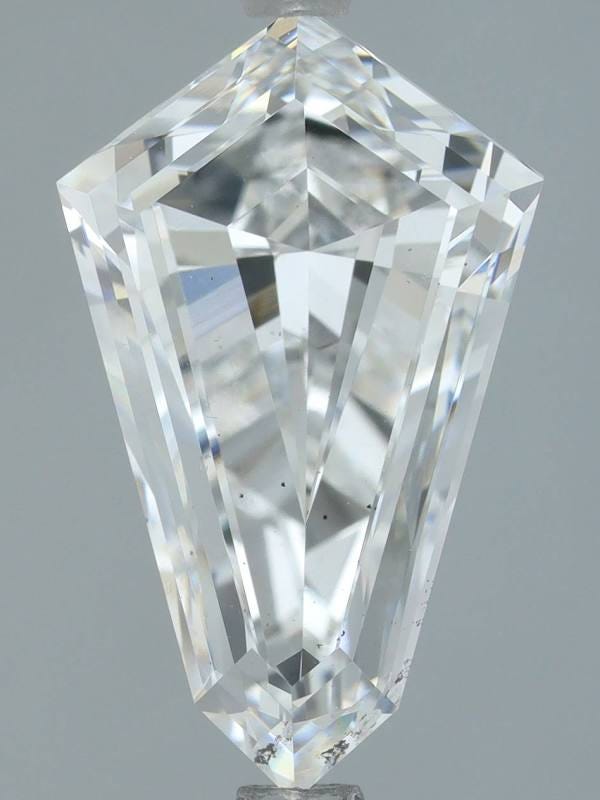
That versatility makes them interesting both as center stones and as side stones. For a three-stone engagement ring, shields offer an alternative to more familiar rounds, pears, and baguettes.
What to look for
If you are choosing a pair, compare:
- Matching dimensions and outlines.
- Similar color appearance.
- Similar brightness and facet patterns.
- Balanced proportions beside the center diamond.
A pair should work together visually — not simply share the same total carat weight. Shield symmetry and the relationship between the two sides of each stone are important elements of its appearance.rockher
4. Portuguese Cuts: Intricate, Layered Reflections
Portuguese-style cutting uses many facets arranged in multiple tiers. It is commonly associated with round or near-round outlines, although variations exist. The effect is a dense, intricate pattern of reflections rather than the same visual rhythm as a conventional round brilliant.earthlyjewels+1
You may see different facet counts advertised. That is a reason to ask about the actual stone, not a reason to assume one fixed number defines every Portuguese-style diamond.
More facets do not automatically mean a better diamond
Facet count describes part of the design. It does not, by itself, guarantee superior beauty.
Compare the diamond in motion. Do you enjoy the pattern? Does it remain lively away from intense display lighting? Does its face-up size suit the ring you want?
Portuguese-style diamonds can also have substantial depth, so comparing millimeter measurements — not just carat weight — is particularly useful.earthlyjewels+1
5. Lily Cuts: A Floral Approach to Diamond Design
Lily cuts bring a flower-like silhouette to diamond jewelry. The classic Lily design is described as having four petal-like lobes and a square table, creating a distinctly botanical appearance.diamondsourceva
It offers a different direction from elongated, angular shapes: softer, decorative, and suited to a wearer who wants the diamond itself to become part of the design.
Design ideas to explore
- A floral engagement-ring concept.
- A pendant that highlights the outline.
- Matching earrings.
- A ring with nature-inspired metalwork.
One important buying detail: “lily” appears in both branded-design discussions and specialty lab-grown diamond listings. Confirm the exact outline, producer, facet arrangement, and documentation rather than assuming every stone sold under the name is identical.diamondsourceva+2
6. Lozenge Cuts: Geometry With Art Deco Appeal
A lozenge is a rhombus-like shape — the familiar diamond outline seen on playing cards. Step-cut versions emphasize pointed corners, geometric lines, and structured reflections.vrai
If a traditional square or rectangle feels too predictable, a lozenge offers a striking alternative.
Design ideas to explore
- A north-south solitaire.
- An east-west statement ring.
- A geometric pendant.
- A vintage-inspired ring with a custom wedding band.
Ask to compare different proportions. A long, narrow lozenge and a broader version can produce very different looks, even when their carat weights are similar. Review the actual measurements and how the shape sits on the hand.vrai+1
7. Oval Step Cuts: A Familiar Outline, a Different Personality
An oval step cut combines an oval silhouette with the orderly reflections associated with step-style faceting. It is not the same visual experience as the more familiar oval brilliant.ourosjewels+1
Instead of choosing it for constant glitter, consider it for its structure, depth, and broader movement of light.
This is not exclusively a lab-grown category. Natural oval step-cut diamonds are sold in finished jewelry, and designers also offer lab-grown versions.artemerstudio+1
What to examine
- Whether the reflections look balanced.
- Whether the center remains visually appealing as you tilt the stone.
- Whether any visible inclusions distract you.
- Whether the shape and dimensions suit your preferred setting.
Step-cut diamonds place particular emphasis on the stone’s lines, proportions, and clarity appearance, making direct comparison especially helpful.ourosjewels
Natural or Lab-Grown: Can You Find These Specialty Cuts in Both?
Some specialty shapes and cutting styles are available in both natural and lab-grown diamonds. Others involve branded sourcing, limited production, or a narrower selection. The name of the cut alone does not establish its origin, availability, or price. Oval step cuts, for example, are offered in both natural and lab-grown versions.artemerstudio+1
Lab-grown diamonds have essentially the same chemical, physical, and optical properties as natural diamonds, but a different origin. They generally occupy a lower price point, which can create more flexibility when balancing size, design, and budget.gia+1
The right question is not simply, “Which is better?”
Ask instead: “Which diamond best fits my priorities, and do I love the actual stone?”
How to Buy a Specialty Diamond With Confidence
1. Compare measurements, not just carat weight
Carat is weight, not a guarantee of visible size. Specialty shapes carry that weight differently, so review length, width, and depth alongside the carat number. Dutch marquise buying guidance specifically emphasizes the measurements and length-to-width relationship.stienhardt
2. Look beyond the marketing name
Ask what the grading report calls the diamond and whether that matches the seller’s description. A report may identify a geometric shape and facet style rather than repeat the retail name “Dutch marquise.”stienhardt
3. Watch the diamond move
Still photographs cannot tell the whole story. Examine the diamond face-up, tilted, and in motion.
GIA research on oval, pear, and marquise diamonds found that observers consistently disliked prominent windowing — areas that appear see-through — while reactions to bow-tie and crushed-ice patterns were more varied. That reinforces why the actual appearance matters more than a blanket rule about one feature.gia
4. Do not mistake polish and symmetry for the whole picture
A report is important, but it cannot replace evaluating the diamond’s appearance. Two fancy-shaped diamonds with similar report details can still differ in their light patterns and visual appeal.bezambar+1
5. Design the setting around the diamond
A specialty shape deserves a setting planned around its outline — not a standard mounting chosen simply because the carat weight sounds compatible.
For pointed designs, discuss protection and secure setting construction. For unusual outlines, also plan how the engagement ring will sit beside a wedding band. GIA’s setting guidance emphasizes that the mounting affects security, overall appearance, and wearability.4cs.gia
6. Compare the complete purchase
When comparing a wholesale diamond quote with another offer, review the complete specifications and services — not only the headline price.
Ask what is included for the center diamond, side stones, metal, custom design, setting work, grading documentation, and aftercare. Similar-looking rings are not necessarily equivalent purchases.
How Houston Diamond Outlet Helps Bring Your Idea Together
You do not need to arrive knowing the difference between a Dutch marquise and a lozenge and building your custom engagement ring.
Start with what you like: sharp geometry, floral shapes, broad reflections, intricate sparkle, a three-stone layout, or an inspiration photo you cannot stop saving.
Houston Diamond Outlet’s consultation process begins with a conversation about your preferences and budget. We then hand-select options for a private viewing and explore custom-design possibilities around your vision. As a diamond and engagement-ring wholesaler, our focus is helping you connect the diamond, design, and price — not simply presenting a ring and asking you to decide.houstondiamondoutlet
Specialty-cut selection varies. Tell us which shapes interest you when scheduling so we can discuss sourcing and viewing options in advance.
Frequently Asked Questions
Are specialty diamond shapes newly invented?
Not necessarily. Some are contemporary designs, some draw on older cutting traditions, and others are branded creations. “Unusual” does not automatically mean “new.” ASHOKA®, for example, was introduced by William Goldberg in 1999.williamgoldberg
Does a fancy shape mean a colored diamond?
No. Shape and color describe different characteristics. A specialty-cut diamond can be colorless, near-colorless, or colored.
Do more facets mean more sparkle?
Not automatically. More facets can create a different reflection pattern, but the result still depends on the execution and proportions. Choose the appearance you enjoy rather than shopping by facet count alone. Portuguese-style cutting illustrates how an intricate pattern can differ from conventional brilliant cutting.earthlyjewels
Can shield diamonds be used beside a Dutch marquise?
That is a design combination worth exploring. Dutch marquise diamonds have a geometric, pointed outline, while shields provide another angular silhouette. The key is selecting stones whose dimensions, facet patterns, and proportions work together.rockher+1
Is every elongated rounded-corner diamond an ASHOKA®?
No. ASHOKA® is a specific branded design associated with William Goldberg, not a generic label for similar-looking diamonds. Confirm authenticity and sourcing before purchasing.williamgoldberg+1
Your Dream Ring May Be a Shape You Have Not Discovered Yet
You do not have to choose between a ring you have seen everywhere and a design you cannot imagine affording. Don’t just go to any jewelry store in Houston.
Start by exploring the possibilities. Compare natural and lab-grown options. See the actual diamonds. Ask questions. Then create a design around what matters to you.
Call Houston Diamond Outlet at 713–784-RING (7464) to schedule your private diamond consultation. Mention the specialty cuts you would like to explore so we can discuss available options before your appointment.houstondiamondoutlet
Have a friend who keeps saying, “I want something different”? Share this guide with them — and follow Houston Diamond Outlet for more diamond education and custom-jewelry inspiration.
Houston Diamond Outlet
Where Houston Gets Engaged.